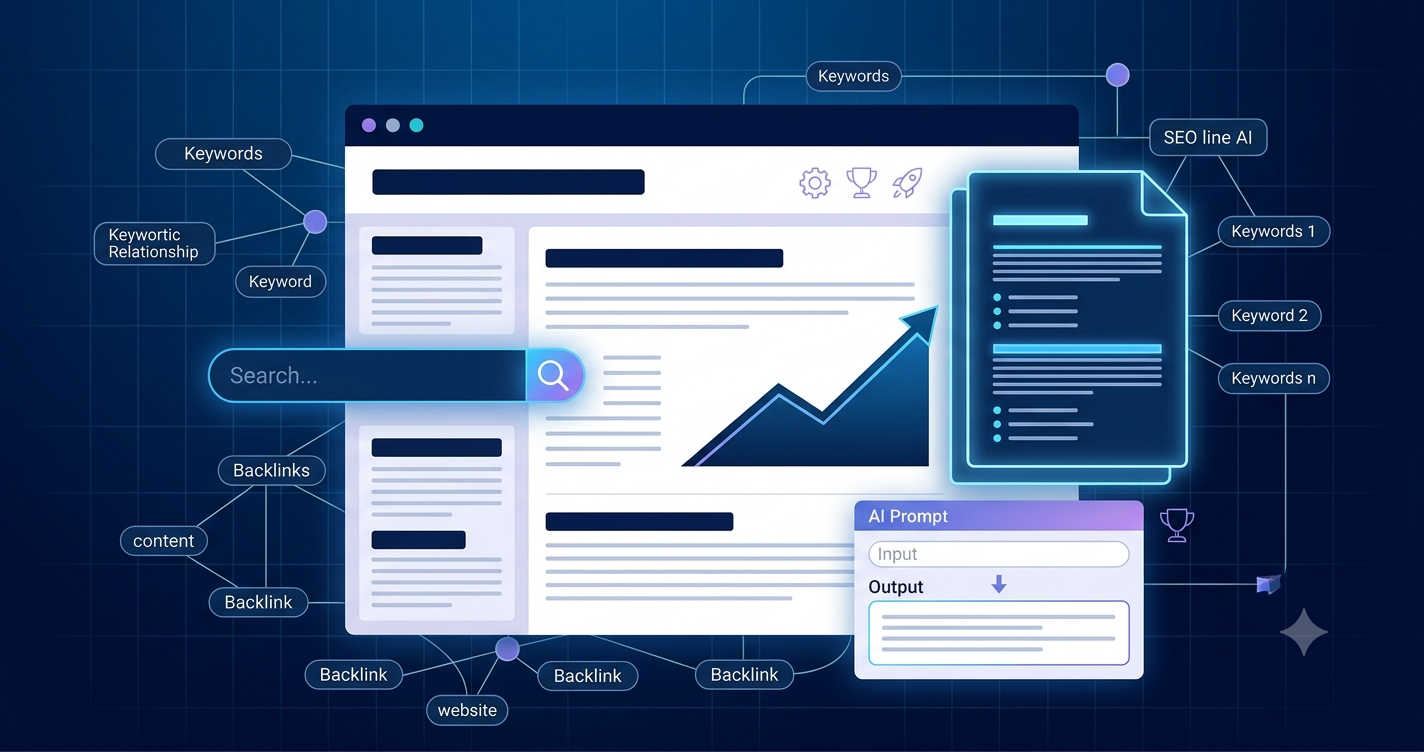
In-Depth Ultimate Guide Prompt: Create Complete, High-Ranking Content That Attracts Traffic and Backlinks
Introduction
The in-depth ultimate guide prompt is one of the most powerful AI writing prompts for creating long-form content that ranks, attracts backlinks, and delivers real value to readers. Instead of generating a short, shallow article, this prompt helps you create a complete resource with beginner-friendly explanations, advanced strategies, step-by-step instructions, examples, best practices, common mistakes, FAQs, and SEO-ready structure.
If your goal is to build topical authority, improve organic traffic, and publish content that feels complete, this prompt is a strong foundation.
Most AI-generated articles fail because they are too generic. They answer the surface-level question but miss the depth search engines and readers expect. A properly designed ultimate guide prompt solves that problem by guiding AI to create a full educational resource.
In this guide, you will learn what an in-depth ultimate guide prompt is, how it works, why it is useful, how to customize it, and how to use it to create high-converting blog posts for SEO, affiliate marketing, SaaS content, digital products, and authority websites.
Featured Snippet Answer
An in-depth ultimate guide prompt is an AI writing instruction designed to create complete long-form content with explanations, steps, examples, FAQs, best practices, and SEO structure. It helps bloggers, marketers, and creators produce detailed articles that can rank higher, attract backlinks, and satisfy user intent.
In-Depth Ultimate Guide Prompt: Complete SEO Resource for High-Traffic Content
What Is an In-Depth Ultimate Guide Prompt?
An in-depth ultimate guide prompt is a structured AI prompt that tells a tool like ChatGPT, Gemini, Claude, or Copilot to create a complete long-form guide on a specific topic.
It usually includes instructions such as:
- Explain the topic from beginner to advanced level
- Include step-by-step guidance
- Add examples and practical use cases
- Include tips and best practices
- Mention common mistakes
- Use H2 and H3 headings
- Add a featured snippet answer
- Include FAQs for schema optimization
- Write in a clear, helpful, and SEO-friendly style
This type of prompt is designed for content depth. It is not only about writing more words. It is about covering the topic fully.
A normal prompt may say:
Write a blog post about email marketing.
An ultimate guide prompt says:
Write a complete beginner-to-advanced guide about email marketing, including strategy, examples, tools, mistakes, best practices, FAQs, and SEO-friendly headings.
The second prompt produces a much stronger article because it gives the AI a clear content framework.
Why the In-Depth Ultimate Guide Prompt Works for SEO
Search engines reward helpful, complete, and well-structured content. Readers also prefer articles that answer their questions without forcing them to visit multiple websites.
The in-depth ultimate guide prompt works because it supports important SEO goals:
It Covers Search Intent
Search intent means the reason behind a user’s search.
For example, someone searching “how to start email marketing” may want:
- A beginner explanation
- Step-by-step setup instructions
- Tool recommendations
- Examples
- Mistakes to avoid
- Cost information
- Best practices
A shallow article may only explain what email marketing is. An ultimate guide covers the full journey.
It Improves Topical Depth
Topical depth means how completely your content covers a subject.
A strong ultimate guide includes:
- Definitions
- Benefits
- Processes
- Examples
- Advanced tips
- FAQs
- Related subtopics
This helps search engines understand that your page is a complete resource.
It Increases Backlink Potential
Backlinks often go to content that feels useful, complete, and reference-worthy. A guide with examples, frameworks, checklists, and clear explanations is more likely to attract links than a short generic post.
It Supports Rank Math Optimization
Rank Math checks include keyword placement, title structure, meta optimization, internal links, external links, readability, and content length. A complete guide prompt can help satisfy many of these requirements naturally.
Who Should Use an In-Depth Ultimate Guide Prompt?
This prompt is useful for many creators and businesses.
Bloggers
Bloggers can use it to publish long-form educational content that targets competitive keywords.
Examples:
- “Ultimate Guide to Blogging for Beginners”
- “Complete Guide to Affiliate Marketing”
- “Beginner’s Guide to AI Tools”
SEO Writers
SEO writers can use the prompt to create structured drafts faster. It helps reduce writer’s block and ensures important sections are included.
Digital Marketers
Marketers can use it for lead-generation content, pillar pages, and educational resources.
SaaS Companies
SaaS brands can use ultimate guides to educate users and explain complex problems.
Example:
- “Ultimate Guide to CRM Automation”
- “Complete Guide to Customer Onboarding”
Course Creators
Course creators can turn ultimate guides into lesson outlines, lead magnets, or free educational blog posts.
Prompt Sellers and AI Tool Websites
Prompt websites can use this format to create SEO pages around high-traffic prompt categories.
How to Use the In-Depth Ultimate Guide Prompt Step by Step
Using this prompt is simple, but the quality depends on how specific your input is.
Step 1: Choose a Clear Topic
Start with one specific topic.
Weak topic:
- Marketing
Better topic:
- Email marketing for small businesses
Strong topic:
- Email marketing automation for small business owners
The more specific your topic is, the more useful the final article will be.
Step 2: Choose the Main Keyword
Your primary keyword should match what people search for.
Example:
- Primary keyword: email marketing automation
- Secondary keywords: email automation tools, email marketing workflow, automated email campaigns
- Long-tail keyword: how to set up email marketing automation for small business
For this article, the primary keyword is in-depth ultimate guide prompt.
Step 3: Add SEO Requirements
Tell the AI exactly what SEO elements to include.
For example:
- SEO title
- Meta description
- URL slug
- H2 and H3 headings
- Featured snippet answer
- FAQ section
- Internal linking suggestions
- External authority links
- Image SEO package
- Schema markup
This makes the output more publish-ready.
Step 4: Request Beginner-to-Advanced Coverage
A strong ultimate guide should help beginners but still provide value for advanced readers.
You can ask the AI to include:
- Basic definition
- Core concepts
- Step-by-step process
- Advanced strategies
- Tools and workflows
- Mistakes and solutions
This creates layered content.
Step 5: Ask for Examples
Examples make content more useful.
For example, if the guide is about content marketing, ask for:
- Blog examples
- Social media examples
- Email examples
- SaaS examples
- Affiliate marketing examples
Examples help readers understand how to apply the advice.
Step 6: Add Common Mistakes
Common mistakes are excellent for SEO and user experience. They answer hidden questions readers may have.
Examples:
- Choosing a broad topic
- Ignoring search intent
- Overusing keywords
- Writing without structure
- Forgetting internal links
- Publishing without editing
Step 7: Edit and Humanize the Output
AI can create a strong draft, but you should still polish it.
Check for:
- Repetition
- Generic advice
- Missing examples
- Keyword stuffing
- Long paragraphs
- Weak introduction
- Poor CTA
- Outdated claims
Human editing improves trust and quality.
Example Use Case: Creating a Blog Post About AI Email Marketing
Here is how you could use the prompt.
Topic:
AI email marketing for small businesses
Primary keyword:
AI email marketing
Expected article sections:
- What is AI email marketing?
- How AI improves email campaigns
- Best AI email marketing tools
- Step-by-step setup process
- Examples of AI email workflows
- Common mistakes
- Best practices
- FAQ
This output can become a complete blog post, lead magnet, or pillar content page.
Advanced Tips for Getting Better Results
Add Your Audience
Always mention who the content is for.
Examples:
- For beginners
- For SaaS founders
- For affiliate marketers
- For local business owners
- For students
- For freelancers
Audience clarity improves tone and relevance.
Add Search Intent
Tell the AI what the reader wants to learn.
Example:
The reader wants to understand what this topic is, how it works, how to use it, and what mistakes to avoid.
This helps the article stay focused.
Add Content Angle
A content angle makes the article unique.
Examples:
- Beginner-friendly
- Practical and step-by-step
- Tool-focused
- Cost-saving
- Advanced strategy
- Fast implementation
- SEO-focused
For Promptscafe, a strong angle would be:
A practical, SEO-focused guide for creators who want to generate high-traffic blog content using AI prompts.
Add Formatting Rules
Good formatting improves readability.
Ask for:
- Short paragraphs
- Bullet points
- Numbered steps
- Tables only when useful
- Clear section headings
- No filler content
Add Conversion Goal
Every blog post should have a goal.
Examples:
- Download a prompt pack
- Read another guide
- Try a tool
- Subscribe to a newsletter
- Buy a template
- Visit a related category
For this post, the CTA can encourage readers to explore more SEO and blog writing prompts.
Best Practices for Using an Ultimate Guide Prompt
Keep the Topic Specific
A narrow topic usually performs better than a broad one.
Instead of:
Ultimate guide to business
Use:
Ultimate guide to AI automation for small business marketing
Specific content attracts more qualified traffic.
Use Keywords Naturally
Do not force the keyword into every sentence. Use variations.
For example:
- in-depth ultimate guide prompt
- ultimate guide prompt
- SEO content prompt
- long-form blog prompt
- AI writing prompt
Natural keyword usage is better for readers and SEO.
Include Internal Links
Internal links help users discover more content and help search engines understand your site structure.
Examples:
- Link to related prompt categories
- Link to beginner guides
- Link to SEO prompt collections
- Link to content writing templates
- Link to AI marketing prompts
Add External Authority Sources
External links can improve trust when they point to credible sources.
Use sources like:
- Google Search Central
- Schema.org
- Rank Math documentation
Optimize for Featured Snippets
To improve featured snippet chances:
- Add a direct 40–60 word answer
- Use clear definitions
- Include lists and steps
- Answer common questions
- Use simple language
Add FAQ Schema
FAQs help answer related search queries. They also improve content completeness.
Good FAQ answers are:
- Short
- Clear
- Direct
- Helpful
- Non-repetitive
Common Mistakes to Avoid
Mistake 1: Using a Broad Topic
A broad topic creates generic content. Choose one clear angle.
Bad:
Write about marketing.
Better:
Write an ultimate guide about AI email marketing automation for small businesses.
Mistake 2: Skipping Keyword Research
A great article can fail if no one searches for the topic. Always choose keywords with search demand and clear intent.
Mistake 3: Asking for “2000 Words” Only
Word count alone does not guarantee quality. Ask for structure, examples, FAQs, and actionable advice.
Mistake 4: Publishing Without Editing
AI drafts need human review. Add original insights, examples, screenshots, or product context.
Mistake 5: Ignoring Internal Links
Internal links help distribute authority across your site. Add them before publishing.
Mistake 6: Forgetting Image SEO
Your featured image should include optimized file name, alt text, title, caption, and description.
Mistake 7: Keyword Stuffing
Repeating the same keyword too often can hurt readability. Use natural variations.
How This Prompt Helps Attract Backlinks
Backlinks usually come from content that gives people a reason to reference it.
The in-depth ultimate guide prompt helps create backlink-worthy assets by including:
- Complete explanations
- Step-by-step frameworks
- Examples
- Checklists
- FAQs
- Clear definitions
- Practical tips
To increase backlink potential, add unique elements such as:
- A downloadable checklist
- A prompt template
- A comparison table
- Original examples
- Expert commentary
- Data or research summaries
The more useful your guide is, the more likely people are to save, share, and link to it.
In-Depth Ultimate Guide Prompt for Rank Math Optimization
To optimize for Rank Math, your content should include:
- Primary keyword in SEO title
- Primary keyword in meta description
- Primary keyword in URL slug
- Primary keyword in first paragraph
- Primary keyword in at least one H2
- Internal links
- External links
- Image alt text
- Short paragraphs
- Table of contents if possible
- FAQ section
- Schema markup
- Natural keyword density
The goal is not to trick Rank Math. The goal is to create content that is easy for search engines and humans to understand.
Act as an expert content creator.

Write the ultimate guide on:
[TOPIC]

Include:
- Beginner to advanced explanation
- Step-by-step guides
- Examples and use cases
- Tips and best practices
- Common mistakes

Structure:
- 2000+ words
- H2 + H3 headings
- Featured snippet answer
- FAQ section

Goal:
Create a complete resource that ranks and attracts backlinks.