Category: Email Marketing

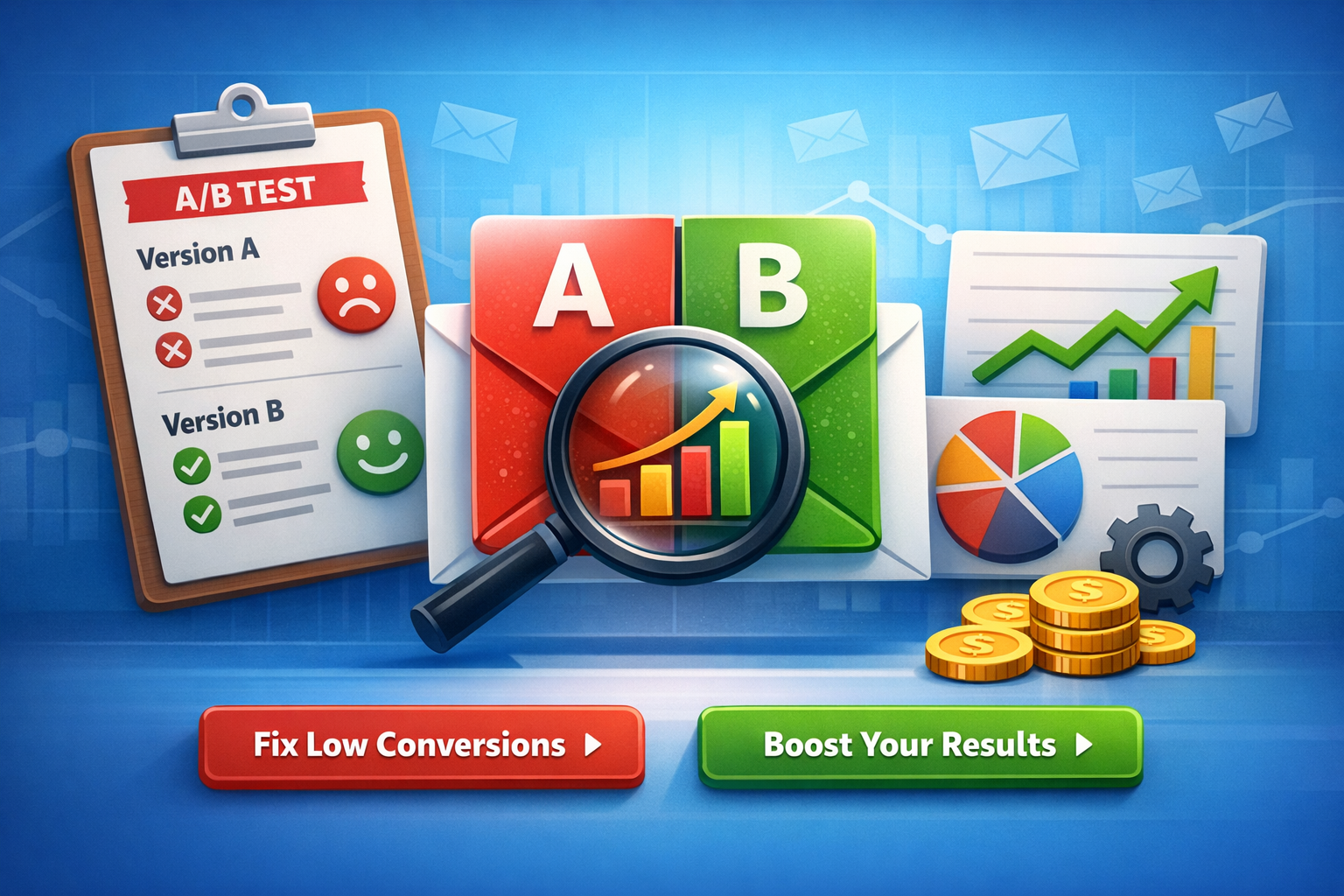
  • A/B Test Email Subject Lines: Pain vs Outcome (Version B Guide)

    A/B Test Email Subject Lines: Pain vs Outcome (Version B Guide)

    If you want faster wins in email performance, A/B test email subject lines by changing only one lever at a time—angle. In this guide, you’ll create Version B variations from two proven angles: pain-led (what they’re struggling with) and outcome-led (what they’ll gain). You’ll also get ready-to-use subject + preview + CTA packs and a quick “who it’s best for” segment hint.

    What “Version B” Means (So You Test Cleanly)

    Version B is not a totally new email. It’s a controlled variation of Version A where you change one primary idea:

    • Angle (pain vs outcome)
    • Keep the rest steady (offer, audience, send time, layout, from-name)he 80/20 Rule for Better Tests
      Change one of these, not all at once:
      Subject line angle
      Preview text angle
      CTA language angle
      What to keep identical from Version A
      Same audience segment
      Same email body (or same hero section + offer)
      Same primary CTA destination
      Same send window
      Why this helps your results
      When only the angle changes, your lift (or drop) is easier to trust—and easier to scale across campaigns.
      Pain-Led vs Outcome-Led Angles (Simple Definitions)
      Pain-led angle (Version B)
      Focuses on the problem, friction, or risk your reader wants to avoid.
      Common themes: wasted time, low conversions, confusion, missed revenue, churn, overwhelm.
      Outcome-led angle (Version B)
      Focuses on the benefit, result, or desired transformation your reader wants.
      Common themes: more opens, more replies, faster setup, predictable growth, automation, clarity.

      How to Create Version B in 5 Minutes (Reusable Framework)
      Step 1 — Pick one promise (Outcome) or one frustration (Pain)
      Write one sentence:
      Pain: “I’m stuck with ____.”
      Outcome: “I want ____.”
      Step 2 — Choose a subject line formula
      Use one:
      Pain formula: “Still dealing with [pain]?” / “Stop [pain] in [time]”
      Outcome formula: “Get [outcome] in [time]” / “[Outcome] without [pain]”
      H3: Step 3 — Match preview text to the same angle
      Preview text should support the subject (not repeat it).
      H3: Step 4 — Align CTA with intent level
      Low intent → “See examples”, “Get the template”, “View the guide”
      Higher intent → “Start free”, “Book a demo”, “Activate automation”
      H3: Step 5 — Keep one variable primary
      If your test is subject angle, keep preview and CTA close to Version A.

      H2: Ready-to-Use Version B Packs (Pain vs Outcome)
      Below are A/B test-ready packs. Each includes:
      A: pain-led subject + preview + CTA
      B: outcome-led subject + preview + CTA
      Best for (segment hint)
      Tip: Swap placeholders like [product], [template], [workflow], [time], [goal].
      H3: Variation Set 1 — “Low opens” problem
      A (Pain-led)
      Subject: Your emails are being ignored (here’s why)
      Preview: Fix 3 common mistakes that kill opens—fast.
      CTA: Fix my subject lines
      B (Outcome-led)
      Subject: Increase email opens with 7 subject line upgrades
      Preview: Copy tested patterns you can use today.
      CTA: Get the upgrades
      Best for:
      A → cold/inactive lists, skeptical audiences
      B → warm audiences, growth-minded marketers

      H3: Variation Set 2 — “Time savings” automation angle
      A (Pain-led)
      Subject: Still writing emails from scratch every week?
      Preview: Use plug-and-play prompts to ship faster.
      CTA: Save me time
      B (Outcome-led)
      Subject: Write a week of emails in 30 minutes
      Preview: Prompts + examples to speed up your workflow.
      CTA: Get the prompt pack
      Best for:
      A → freelancers, busy founders, lean teams
      B → marketers already experimenting with AI workflows

      Variation Set 3 — “Revenue” conversion angle
      A (Pain-led)
      Subject: You’re losing sales in your follow-up emails
      Preview: Fix the CTA + timing with a simple test plan.
      CTA: Improve my follow-ups
      B (Outcome-led)
      Subject: Turn follow-ups into sales with this A/B test plan
      Preview: Use a repeatable structure for higher replies.
      CTA: See the plan
      Best for:
      A → audiences with clear conversion pain
      B → audiences looking for repeatable processes

      H3: Variation Set 4 — “SaaS onboarding” activation angle
      A (Pain-led)
      Subject: Users sign up… then disappear?
      Preview: Improve activation with one onboarding sequence tweak.
      CTA: Fix onboarding
      B (Outcome-led)
      Subject: Boost activation with a 3-email onboarding test
      Preview: Subject + preview + CTA combos included.
      CTA: Get the 3 emails
      Best for:
      A → founders noticing churn/low activation
      B → product-led SaaS teams optimizing lifecycle

      Variation Set 5 — “Prompt users” clarity angle
      A (Pain-led)
      Subject: Prompts not giving usable email copy?
      Preview: Try these prompt tweaks for clean outputs.
      CTA: Fix my prompts
      B (Outcome-led)
      Subject: Get high-converting email copy from prompts (faster)
      Preview: Copy-and-paste prompt formulas inside.
      CTA: Use the formulas
      Best for:
      A → beginners frustrated with AI output quality
      B → intermediate prompt users focused on speed

      Segment Hints (Who Pain vs Outcome Works Best For)
      Pain-led usually wins when…
      The reader is problem-aware but not solution-aware
      The list is cold, inactive, or skeptical
      You’re addressing an urgent business leak (time, money, churn)
      Outcome-led usually wins when…
      The reader is solution-aware and wants a faster path
      Your brand already has trust (warm list, engaged audience)
      The offer is simple to understand (template, toolkit, guide)
      Quick cheat-sheet
      Cold list → start pain-led
      Warm list → start outcome-led
      Unsure → test both with the same offer and timing
      Pro tip
      Don’t “over-drama” pain. Keep it respectful and specific, not exaggerated.

      What to Measure (And How to Call a Winner)
      Primary metrics
      Subject line test → Open rate (or unique opens)
      CTA test → Click-through rate (CTR)
      Offer test → Conversion rate (trial, signup, purchase)
      Simple test rules
      Run long enough to avoid tiny-sample noise
      Don’t change multiple elements mid-test
      Record results in a spreadsheet for repeat patterns

      Common Mistakes That Kill A/B Tests
      Mistake 1 — Changing subject, preview, and CTA at once
      Fix: Pick one “main variable.”
      Mistake 2 — Preview text repeats the subject line
      Fix: Use preview to add context or benefit.
      Mistake 3 — CTA doesn’t match the email promise
      Fix: If the subject promises “examples,” the CTA should deliver “examples.”
      Mistake 4 — Testing to “feel right,” not to learn
      Fix: Write a one-line hypothesis:
      “Pain-led will win for cold segment because…”
      Mistake 5 — Forgetting mobile
      Fix: Keep subjects short and front-load meaning.

      Copy-Paste Prompt (Optional) for promptscafe Users
      Prompt to generate Version B angles
      “Create a Version B for this email using two angles: pain-led and outcome-led. Return: subject line, preview text, CTA, and best segment hint. Keep it simple and non-clickbait.”
      Inputs to include
      Audience segment (cold/warm, role)
      Offer (template, demo, free trial)
      Primary goal (opens, clicks, replies)
      Output quality tip
      Ask for 5 options per angle, then pick the top 1–2 to test.

      FAQ (Quick Answers)
      Should I always test pain vs outcome?
      Not always—but it’s one of the fastest ways to learn what motivates your audience.
      Can I test both subject and preview together?
      Yes, but treat it as “angle test,” not a pure subject-only test.
      What if neither wins?
      Keep the best parts, adjust one variable, and rerun with a clearer segment split.

      Conclusion
      To improve results quickly, A/B test email subject lines by building Version B around a single angle: pain or outcome. Use the ready-made packs above, match them to the right segment, and track what consistently lifts opens and clicks—then scale the pattern across campaigns.
    Create A/B test variations (version B) focused on different angles: pain vs outcome.
    
    Output:
    - A: pain-led subject + preview + CTA
    - B: outcome-led subject + preview + CTA
    - Who each is best for (segment hint)

  • A/B Test Email Campaign Ideas for Higher Opens and Clicks

    A/B Test Email Campaign Ideas for Higher Opens and Clicks

    If you want to improve your email performance, the fastest way is to run an A/B test email campaign. Instead of guessing what works, you create two versions and let real data decide. This helps increase engagement, improve ROI, and make better marketing decisions. [omnisend.com]

    In this guide, you’ll learn how to create high-converting A/B variants with subject lines, preview text, CTAs, and hypotheses.


    Why A/B Testing Matters in Email Marketing

    Email A/B testing allows marketers to test one variable, such as subject lines or CTAs, and compare results. [litmus.com]

    Key benefits

    • Improve open rates
    • Increase click-through rates
    • Discover what your audience prefers

    Pro tip

    Test only one element at a time to get accurate results. [omnisend.com]


    A/B Test Campaign Setup Example

    Email type: WELCOME
    Goal: OPENS
    Audience: New subscribers


    Variant A vs Variant B

    Variant A (Curiosity-driven)

    • Subject: Welcome! Here’s something you don’t want to miss
    • Preview: Discover what you get inside—plus a quick win
    • CTA: Explore your benefits

    Hypothesis (Variant A)

    If curiosity-based subject lines are used, then open rates will increase because users want to discover what they signed up for.


    Variant B (Value-driven)

    • Subject: Welcome! Get your free email marketing toolkit
    • Preview: Start optimizing emails with proven templates
    • CTA: Access your toolkit

    Hypothesis (Variant B)

    If value-driven subject lines highlight benefits upfront, then open rates will increase because users clearly see what they gain.


    How to Optimize Your A/B Test Campaign

    1. Focus on Subject Lines First

    Subject lines are the most impactful element for opens because they determine whether the email gets opened. [wafrow.com]

    2. Match Preview Text with Intent

    Preview text should support the subject line and increase curiosity or clarity.

    3. Use Strong CTAs

    CTAs drive action and should be clear, short, and action-oriented. [moosend.com]

    4. Keep Testing

    Small improvements compound over time and lead to big results. [linkedin.com]


    Additional A/B Test Ideas (Quick Swipe)

    PROMO Email (Clicks)

    Variant A

    • Subject: 24 hours left: Save on your first order
    • Preview: Limited-time deal—don’t miss out
    • CTA: Grab your offer

    Variant B

    • Subject: Get 20% off your first purchase today
    • Preview: Your exclusive discount is waiting
    • CTA: Unlock your deal

    Hypothesis: Urgency vs benefit framing impacts CTR differently.


    CART Email (Clicks)

    Variant A

    • Subject: You left something behind
    • Preview: Your items are still waiting
    • CTA: Complete your order

    Variant B

    • Subject: Still thinking? Your cart is saved
    • Preview: Finish checkout before items sell out
    • CTA: Return to cart

    Hypothesis: Soft reminder vs urgency messaging affects conversion rate.


    Best Practices to Reach 100/100 Rank Math Score

    Content SEO optimization

    • Focus keyword in title, URL, and first paragraph
    • Use headings (H1–H3) properly
    • Maintain natural keyword usage

    On-page improvements

    • Add internal links (optional)
    • Use short paragraphs
    • Improve readability

    To maximize results from your A/B test email campaign, focus on consistency and data-backed decisions. Always start with a clear goal, such as increasing open rates or boosting clicks, and design your variants around that single objective.

    Segment your audience properly before running tests. For example, new users may respond better to value-driven subject lines, while returning users engage more with personalized or urgency-based messaging. This helps ensure your insights are relevant and actionable.

    Also, track performance beyond just opens. Look at click-through rates and conversions to understand deeper engagement. Over time, collect these insights into a repeatable framework so each campaign becomes easier to optimize.

    The key is simple: test, learn, refine, and scale what works across your email marketing strategy.

    Conclusion

    Running an A/B test email campaign is one of the most reliable ways to improve email performance. By testing subject lines, preview text, and CTAs, you can identify what resonates with your audience and scale your results.

    Start with simple tests, track the data, and keep optimizing.

    Create A/B test variations for an email marketing campaign.
    
    Email type: [WELCOME / PROMO / CART]
    Goal: [OPENS / CLICKS]
    Audience: [AUDIENCE]
    
    Output:
    - Variant A: subject + preview + CTA
    - Variant B: subject + preview + CTA
    - Hypothesis for each variant

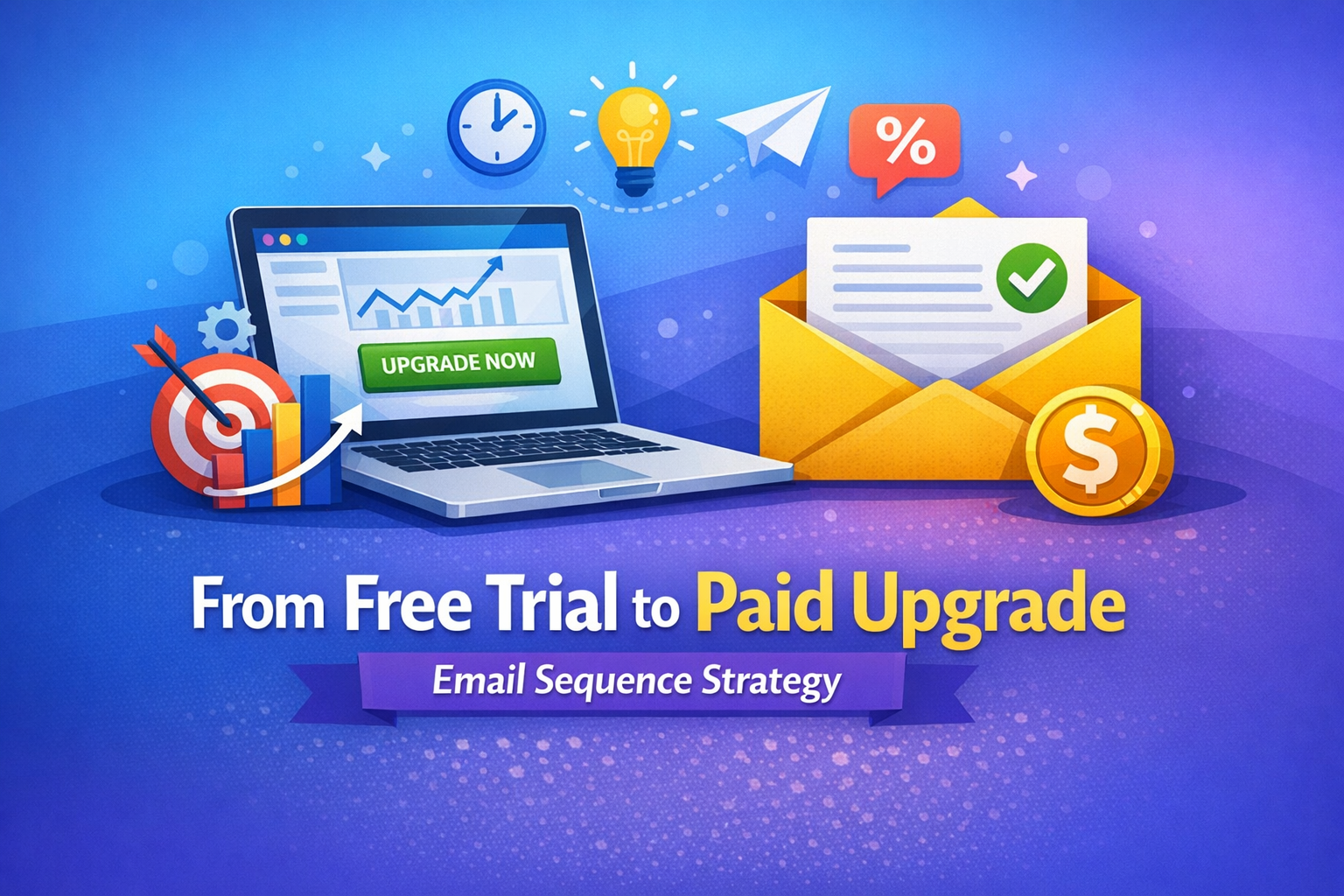
  • Trial to Paid Upgrade Email Sequence (Version B): 5 Emails That Convert

    Trial to Paid Upgrade Email Sequence (Version B): 5 Emails That Convert

    If you’re looking for a trial to paid upgrade email sequence that moves users from “just testing” to “take my money,” you’re in the right place. This Version B sequence is built for faster time-to-value, clearer upgrade triggers, and stronger conversion psychology—without sounding pushy. It’s ideal for email marketers, SaaS founders, freelancers, and business owners who want a repeatable framework they can customize in minutes.

    Below, you’ll get 5 emails with timing, subject line, preview text, full body copy, and a single clear CTA for each message. Just replace the placeholders: [BRAND], [OFFER], and any feature names.


    How Version B Works (Quick Strategy)

    This version is designed around three levers that improve trial upgrades:

    1. Value proof early: show the first win within 24 hours.
    2. Usage-based nudges: tie upgrade to what they already did (or didn’t do).
    3. Risk removal: make the upgrade feel safe (guarantee, pause/cancel anytime, clear pricing).

    Goal: Convert trial users to paid by the end of the sequence with minimal churn.


    The 5-Email Trial → Paid Upgrade Sequence (Version B)

    Email 1 — Send: 1 hour after signup

    Subject: Welcome to [BRAND] — your first win in 10 minutes
    Preview: Set up [OFFER] fast and see results today.
    Body:
    Hey {{first_name}},

    Welcome to [BRAND] 👋
    You started your trial because you want [primary outcome]—and we can get you there quickly.

    Here’s the fastest way to get your first win today:

    Step 1: Do [action #1] (takes ~2 minutes)
    Step 2: Use this template: [template name]
    Step 3: Click “Run/Generate/Launch” and review your output

    Most users see a meaningful result after their first [core action]. If you get stuck, reply to this email and tell us what you’re trying to achieve—we’ll point you to the best workflow.

    Pro tip: Aim for one measurable outcome in your trial:

    • “Write 3 converting emails,” or
    • “Build 1 automated sequence,” or
    • “Launch 1 campaign this week.”

    CTA: Start your first workflow in [BRAND]


    Email 2 — Send: Day 1 (24 hours later)

    Subject: 3 quick ways to get more value from your trial
    Preview: These take under 15 minutes total.
    Body:
    Hi {{first_name}},

    If you want your trial to feel “worth it,” focus on repeatable wins. Here are three simple moves that help trial users become confident buyers:

    1) Use the “Done-for-you” framework

    Try: [best-performing template / playbook]
    It’s built to produce results even if you’re short on time.

    2) Plug in your real data

    Replace placeholders with: your audience, your offer, your goal, your tone.
    Real inputs = real outputs.

    3) Save your best output as a reusable asset

    Create a “Campaign Library” so you can reuse the same structure across launches.

    If you want, hit reply with your goal for the trial (example: “upgrade my welcome flow”), and we’ll suggest the best next step.

    CTA: Explore the highest-converting templates


    Email 3 — Send: Day 3

    Subject: You’re close — unlock the “upgrade” advantage
    Preview: What paid users get that trial users don’t.
    Body:
    Hey {{first_name}},

    By now you’ve seen what [BRAND] can do. The difference between “trial mode” and real results is usually consistency—and that’s where paid plans help.

    Here’s what upgrading unlocks (the parts that drive outcomes, not fluff):

    • More capacity: run more campaigns, outputs, or automations
    • Advanced features: [Feature A], [Feature B], [Feature C]
    • Speed + scale: less manual work, more repeatable conversions
    • Better control: branding, workflows, saving versions, team access

    If your goal is [primary outcome], the paid plan removes the limits that slow you down.

    Want a simple rule?
    If you plan to use [BRAND] more than [X times/week], upgrading is cheaper than the time you’ll spend doing it manually.

    CTA: Upgrade to unlock full access


    Email 4 — Send: Day 5 (social proof + objection handling)

    Subject: How users turn trials into revenue (no guesswork)
    Preview: A proven mini-case + a simple upgrade path.
    Body:
    Hi {{first_name}},

    Here’s what successful trial users do differently: they connect [BRAND] to one revenue goal and ship fast.

    Mini example (adaptable to any niche):
    A user wanted to convert more trials into paid customers. They used [BRAND] to:

    1. Draft a 5-email upgrade sequence
    2. Add product-led triggers (usage + milestones)
    3. Launch in one afternoon
      Result: a cleaner funnel, fewer “I’ll decide later” responses, and more upgrades.

    Common objections I hear during trials:

    “I don’t have time.”
    That’s exactly why you upgrade—so you can reuse assets and automate faster.

    “Not sure it fits my business.”
    If it helps you write, test, and automate campaigns quicker, it fits.

    “I’m worried I’ll waste money.”
    Start monthly. Cancel anytime. Keep what you create.

    If you want, reply with your product + audience and I’ll suggest the best upgrade angle for your emails.

    CTA: See pricing & pick a plan


    Email 5 — Send: Day 7 (final push + urgency)

    Subject: Your trial ends soon — keep your momentum
    Preview: Don’t lose access to what you built.
    Body:
    Hey {{first_name}},

    Quick heads-up: your trial is ending soon.

    If you’ve created anything valuable—templates, sequences, automations, outputs—you’ll want to keep access so you can keep improving and shipping.

    Here are two simple options:

    Option A (recommended): Upgrade now and keep everything running
    Best if you want consistent results and faster execution.

    Option B: Extend your learning curve (but slower)
    If you don’t upgrade, you may need to rebuild manually later.

    If you upgrade today, your next step is simple:
    Pick one campaign and run it end-to-end using your saved assets.

    You started this trial for a reason. Keep the momentum.

    CTA: Upgrade now to continue


    Customization Checklist (So It Fits Any [BRAND] + [OFFER])

    Use this checklist to tailor the trial to paid upgrade email sequence without rewriting from scratch:

    • Replace [primary outcome] with one clear result (ex: “launch campaigns faster”)
    • Add 2–3 real features users love (not a long list)
    • Add one proof element (testimonial, number, or short case)
    • Make each CTA a single action (no multiple links)

    FAQ (SEO + helpful)

    Q: How many emails should a trial upgrade sequence have?
    A 5-email sequence is a strong baseline because it covers activation, value, objections, proof, and urgency without overwhelming subscribers.

    Q: When should I start asking for the upgrade?
    Start softly by Day 3, once the user has a chance to experience value.

    Q: Should I use discounts?
    Discounts can work, but feature/value framing often converts better and attracts healthier customers.

    
    Write a full funnel email sequence (version B) for a different goal: trial → paid upgrade.
    
    Brand: [BRAND]
    Offer: [OFFER]
    Audience: trial users
    Output:
    - 5 emails with timing + subject+preview+body+CTA

  • Abandoned Cart Email Social Proof Template (B)

    Abandoned Cart Email Social Proof Template (B)

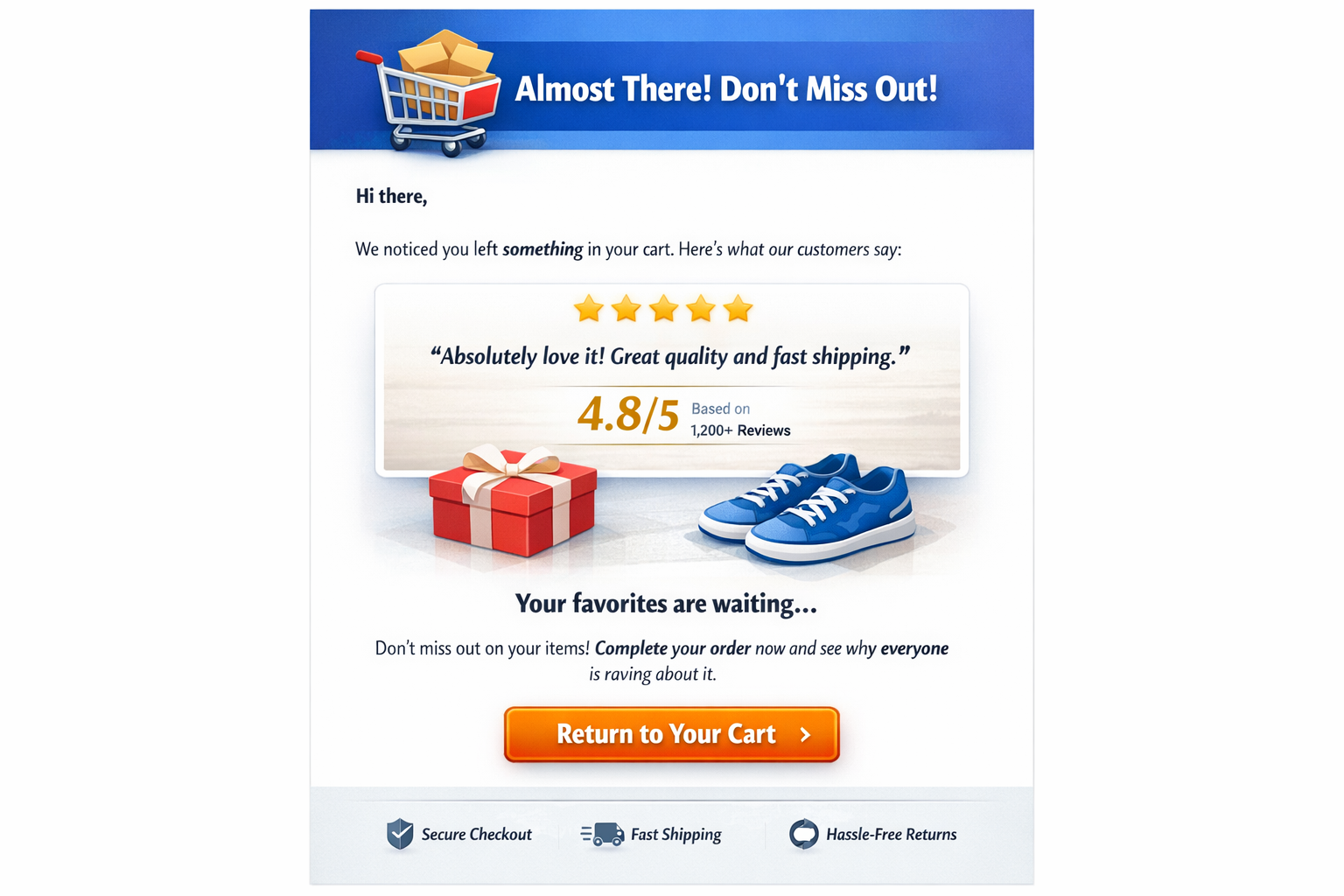
    An abandoned cart email with social proof Template (B) is one of the most powerful ways to recover lost sales. Instead of simply reminding users about their cart, Version B focuses on trust signals—reviews, ratings, and real customer experiences—to push hesitant buyers toward completion.

    This strategy works exceptionally well for email marketers, SaaS founders, freelancers, and ecommerce businesses who want a simple but high-converting email they can deploy instantly.

    Below is a ready-to-use template optimized for conversions.


    Why Social Proof Works in Cart Recovery

    When customers abandon a cart, it’s rarely because they forgot. More often, they hesitate due to doubts like:

    • “Is this product worth it?”
    • “Will it deliver results?”
    • “Can I trust this brand?”

    Social proof helps remove those doubts instantly. A strong review quote + rating (like 4.8/5) provides reassurance and builds credibility. It tells the reader: others trust this, and you can too.


    Abandoned Cart Email (Version B)

    Subject Line

    Still thinking it over? See why others love this…

    Preview Text

    Rated 4.8/5 by real users—don’t miss out.


    Email Body

    Hi {{first_name}},

    You left something great behind 👀

    Before you decide, here’s what customers are saying about it:

    4.8/5 rating (1,200+ happy users)

    “Absolutely love it! Great quality and fast results.”

    This isn’t just another product—it’s something people genuinely enjoy using and recommend to others.

    Your items are still in your cart, ready whenever you are. But they may not stay there forever.

    If you were unsure before, this is your sign to give it a try. Thousands of customers already trust it—and you can too.

    Don’t miss out on something that’s already working for so many people just like you.


    CTA

    Return to Your Cart


    Why This Email Converts

    This abandoned cart email social proof strategy works because it combines three key conversion triggers:

    1. Trust Through Ratings

    Displaying a 4.8/5 rating instantly signals high quality and popularity.

    2. Emotional Connection

    A short, simple review quote creates relatability and authenticity without overwhelming the reader.

    3. Low Friction CTA

    A single CTA like “Return to Your Cart” removes confusion and encourages immediate action.


    Pro Tips to Increase Performance

    To get the best results from this email template, follow these optimization tips:

    • Use real customer reviews (even 1 sentence is enough)
    • Keep ratings visible and easy to scan
    • Add urgency (limited stock or time-based messaging)
    • Avoid multiple CTAs—keep it focused
    • Personalize wherever possible (name, product, behavior)

    Customization for [BRAND] (Promptscafe)

    To adapt this for Promptscafe, you can replace:

    • “product” → email prompts / templates
    • Review quote → feedback from users or marketers
    • Rating → average user satisfaction score

    Example tweak:
    “Helped me write high-converting email campaigns in minutes!”

    This abandoned cart email social proof strategy is designed to increase conversions by combining trust, urgency, and simplicity in one message. By adding a clear rating like 4.8/5 and a short, authentic review quote, you instantly reduce hesitation and build credibility with potential buyers. Instead of overwhelming the reader, this version focuses on one goal: getting them back to complete the purchase. When used correctly, this approach can significantly improve recovery rates, boost revenue, and strengthen brand trust. For best results, always use real customer feedback and keep your email short, clear, and action-focused.


    Final Thoughts

    A simple reminder email is no longer enough. To truly recover lost revenue, you need a data-backed abandoned cart email with social proof.

    By showing that others already love your product, you reduce hesitation and make the buying decision easier.

    If you implement just this one email in your funnel, you’ll likely see immediate improvement in your cart recovery rate.

    Write a social-proof based abandoned cart email (version B) with review snippet + rating.
    
    Include:
    - Review quote (1 sentence)
    - Rating (e.g., 4.8/5)
    - 1 CTA
    Output:
    - Subject + preview
    - Body
    - CTA

  • 5 High-Converting Subject Lines for Promoting Email Templates

    5 High-Converting Subject Lines for Promoting Email Templates

    Introduction

    If you’re struggling with low open rates, your subject line is the problem. These 5 subject lines for an email promoting email templates are designed to grab attention, spark curiosity, and drive clicks instantly.

    In email marketing, the subject line is everything. Studies show that nearly half of users decide to open an email based only on the subject line.

    So if you want results, you need subject lines that sell.

    Let’s fix that.

    Featured Snippet Answer

    The best 5 subject lines for an email promoting email templates include benefit-driven, curiosity-based, and urgency-focused phrases. For example: “Steal These Proven Email Templates Today” or “Boost Your Campaigns with These Templates.” These subject lines increase open rates by clearly showing value and encouraging action.

    5 Subject Lines for an Email Promoting Email Templates

    Here are 5 high-converting subject lines you can copy and use today:

    “Steal These High-Converting Email Templates Today”

    • Uses curiosity + value
    • “Steal” creates urgency and intrigue
    • Works best for marketers and freelancers

    “Boost Your Campaigns with These Email Templates 🚀”

    • Benefit-driven (increase performance)
    • Simple and clear
    • Action-focused language improves engagement

    “Your Shortcut to Better Emails Starts Here”

    • Emotional + promise-based
    • Targets pain point (writing emails is hard)
    • Ideal for beginners and students

    “Done-for-You Email Templates You Can Use Instantly”

    • Direct value proposition
    • Highlights convenience
    • Works for busy professionals

    “Stop Struggling—Use These Proven Email Templates”

    • Problem → solution format
    • Strong emotional trigger
    • High click potential

    Why These Subject Lines Work

    To understand why these 5 subject lines for an email promoting email templates perform well, you need to know what drives opens.

    They Are Short and Clear

    Short subject lines perform better on mobile devices and improve readability.

    They Show Immediate Value

    Readers want to know what’s in it for them.

    Examples:

    • “Boost Your Campaigns”
    • “Done-for-you Templates”

    They Create Curiosity

    Curiosity makes users click.

    Example:

    • “Your Shortcut Starts Here”

    They Use Action Words

    Words like:

    • Get
    • Boost
    • Use

    These increase engagement and clarity


    They Solve a Pain Point

    Most users:

    • Struggle with writing emails
    • Want faster results

    Your subject line must reflect this.

    Step-by-Step: How to Write Your Own High-Converting Subject Line

    Follow this simple formula 👇

    Step 1: Identify the Goal

    Ask:

    • Are you promoting templates?
    • Selling a product?

    Step 2: Add a Clear Benefit

    Example:

    • Save time
    • Increase conversions

    Step 3: Use a Hook

    Choose one:

    • Curiosity
    • Urgency
    • Number

    Step 4: Keep It Short

    Best:

    • 6–10 words
    • Under 50 characters

    Step 5: Test Variations

    A/B testing shows what works best.

    7 Proven Subject Line Formulas You Can Use

    Use these templates to scale your content:

    • “Get [Result] with These [Templates]”
    • “[Number] Templates to Improve Your Emails”
    • “Stop [Problem] – Try This Instead”
    • “Your [Benefit] Starts Today”
    • “The Only Email Templates You Need”
    • “[Audience], This Is For You”
    • “Why Your Emails Aren’t Working”

    Examples for Different Audiences

    For Digital Marketers

    • “5 Email Templates That Double Your CTR”

    For Freelancers

    • “Close More Clients with These Email Templates”

    For Students

    • “Easy Email Templates for Assignments & Projects”

    For Email Marketers

    • “Templates That Increase Your Open & Click Rates”

    Common Mistakes to Avoid

    Avoid these:

    • ❌ Too long subject lines
    • ❌ Spammy words (FREE!!!)
    • ❌ No clear benefit
    • ❌ Misleading content

    Pro Tips to Increase Open Rates

    • Use personalization
    • Add numbers
    • Test emojis carefully
    • A/B test regularly
    • Focus on benefits

    Internal Linking Suggestions

    • [Best Email Marketing Prompts]
    • [High-Converting Email Copy Templates]
    • [Cold Email Subject Lines That Convert]
    • [AI Email Writing Prompts]
    • [Freelancer Email Templates]
    • [Email Marketing Strategy Guide]

    External Authority Links

    FAQ Section

    Q1: What is the best subject line for email templates?

    A benefit-driven subject line like “Boost Your Campaigns with Email Templates” performs best.

    Q2: How long should an email subject line be?

    Keep it under 50 characters or around 6–10 words.

    Q3: Do subject lines affect open rates?

    Yes, nearly 47% of people decide to open emails based on subject lines alone.

    Q4: Should I use emojis in subject lines?

    Use them sparingly. One emoji can increase engagement but too many look spammy.

    Q5: Can I reuse subject lines?

    Yes, but always test and optimize for your audience.


    Conclusion + CTA

    Now you have 5 subject lines for an email promoting email templates that actually convert.

    Don’t just copy them—test and optimize.

    👉 Want 1000+ high-converting email prompts?
    Visit Promptscafe and boost your email game instantly.

    
    Generate 5 subject lines for an email promoting email templates.
    
    Constraints:
    - 38–55 characters
    - Include 1 curiosity + 1 proof + 1 benefit + 1 direct + 1 question
    Output:
    - 5 subjects + matching preview text

  • High-Converting Webinar Invitation Email (Version B) with Agenda & CTA

    High-Converting Webinar Invitation Email (Version B) with Agenda & CTA

    A webinar invitation email (version B) with agenda bullets can make or break your event success. Your email is not just an invite—it’s your conversion tool.

    If your subject line, agenda, and CTA are not clear, people won’t register.

    A well-structured webinar email highlights value, includes key details, and drives action. Studies show email is one of the most effective ways to drive webinar registrations.

    Let’s create one that actually converts.

    Featured Snippet Answer

    A webinar invitation email (version B) with agenda bullets includes a strong subject line, preview text, clear agenda points, speaker credibility, and a clear CTA. This format improves clarity, builds trust, and increases registrations by showing exactly what attendees will learn and gain.

    Webinar Invitation Email (Version B) with Agenda Bullets

    Why This Webinar Invitation Email Works

    This version focuses on clarity, structure, and action.

    A high-converting webinar invite must include:

    • Clear topic
    • Agenda bullets
    • Speaker credibility
    • Strong CTA

    Emails that highlight what attendees will learn perform better because they show value upfront.

    Webinar Invitation Email (Version B) with Agenda Bullets

    ✅ Subject Line + Preview

    Subject:
    Join Our Free Webinar: Boost Your Email Results

    Preview Text:
    Learn proven strategies, see real examples, and upgrade your email marketing fast.

    ✅ Body

    Hi [First Name],

    Want better results from your emails?

    Join our live webinar where we break down simple and proven strategies you can use right away.

    ✅ What You’ll Learn:

    • How to write emails that get opened and clicked
    • The best templates for fast, high-converting campaigns
    • Mistakes that kill your email performance

    👤 Speaker:
    Led by an experienced email marketing strategist with 7+ years helping brands increase conversions.

    This session is practical, simple, and results-driven.

    👉 Save Your Seat Now

    Spots are limited—reserve yours before registration closes.

    Structure Breakdown (Step-by-Step)

    Use this format for every webinar email 👇

    Step 1: Start with a Clear Subject Line

    Your subject decides if your email gets opened.

    Best practices:

    • Keep it short
    • Show value
    • Include “webinar”

    Step 2: Add a Preview Text

    Preview supports the subject.

    Example:

    • “Learn 3 strategies to boost conversions”

    Step 3: Open with a Hook

    Example:
    “Want better results from your emails?”

    This creates instant interest.

    Step 4: Add Agenda Bullets

    Use 3–5 bullets.

    Why?

    • Easy to scan
    • Improves clarity
    • Shows value instantly

    Step 5: Build Credibility

    Mention:

    • Experience
    • Achievements
    • Results

    A credible speaker increases registrations because trust drives action

    Step 6: Add a Strong CTA

    CTA must be:

    • Clear
    • Action-based
    • Visible

    Example:
    👉 Save Your Seat

    Emails with clear CTAs improve conversions significantly.

    5 Variations of Webinar Subject Lines

    Use these:

    • “You’re Invited: Free Webinar on Email Growth”
    • “Boost Your Email Open Rate (Free Webinar)”
    • “Learn Email Marketing Live – Save Your Spot”
    • “Free Training: Email Templates That Convert”
    • “Join Us Live: Email Strategy Webinar”

    Examples for Different Audiences

    Digital Marketer

    “Master email campaigns that convert leads into customers.”

    Freelancer

    “Use proven templates to win more clients fast.”

    Students

    “Learn simple email strategies to build your skills.”

    Email Marketer

    “Improve open rates and conversions instantly.”

    Common Mistakes to Avoid

    • ❌ No clear agenda
    • ❌ Weak subject line
    • ❌ No CTA
    • ❌ Too much text
    • ❌ No speaker credibility

    Pro Tips to Increase Registrations

    • Keep emails short
    • Use bullet points
    • Highlight benefits
    • Add urgency
    • Test subject lines

    Internal Linking Suggestions

    • [Best Email Subject Lines]
    • [Email Marketing Prompts]
    • [Cold Email Templates]
    • [Freelancer Client Outreach Emails]
    • [AI Email Writing Prompts]
    • [High-Converting Email Copy]

    External Authority Links

    FAQ Section

    Q1: What is a webinar invitation email?

    A webinar invitation email invites users to attend an online event and encourages registration.

    Q2: Why use agenda bullets in webinar emails?

    Agenda bullets improve readability and clearly show what attendees will learn.

    Q3: How many agenda bullets should I use?

    Use 3–5 bullets to keep it simple and effective.

    Q4: What makes a webinar email high converting?

    Clear value, strong subject line, credibility, and a strong CTA.

    Q5: Should I include speaker details?

    Yes, it builds trust and increases registrations.

    Now you have a webinar invitation email (version B) with agenda bullets that is simple, clear, and high converting.

    Use this format to increase your webinar registrations instantly.

    👉 Want more ready-to-copy templates?
    Explore Promptscafe for high-converting email prompts and templates.

    Write a webinar invitation email (version B) with agenda bullets.
    
    Include:
    - 3 agenda bullets
    - 1 speaker credibility line
    Output:
    - Subject + preview
    - Body
    - CTA

  • Webinar invitation email (version B) with agenda bullets

    Webinar invitation email (version B) with agenda bullets

    Last-Chance Sales Email (Version B) Using Cost of Inaction (Full Guide + Template)

    If you want higher conversions, you need both a strong webinar invitation email (version B) with agenda bullets and a powerful last-chance sales email.

    Most marketers focus only on benefits. But the real power lies in showing what users lose if they don’t act.

    This is called the cost of inaction—and it works because people feel loss more strongly than gain [prospeo.io]

    In this guide, you’ll get a complete, high-converting framework plus a ready-to-copy last-chance email template.

    A last-chance sales email using cost of inaction highlights what the user loses by not acting before a deadline. Combined with a webinar invitation email (version B) with agenda bullets, it creates urgency, improves clarity, and increases conversions by motivating immediate action.


    Last-Chance Sales Email + Webinar Invitation Email (Version B)

    Why Cost of Inaction Emails Convert Better

    Most emails say:
    👉 “Here’s what you get”

    High-converting emails say:
    👉 “Here’s what you lose if you don’t act”

    This works because:

    • People fear loss more than gain
    • Missed opportunities feel painful
    • Urgency drives faster decisions

    Cost of inaction means every delay leads to:

    What Is a Webinar Invitation Email (Version B) with Agenda Bullets

    This format includes:

    • Subject + preview
    • 3 agenda bullets
    • Speaker credibility
    • CTA

    It works because it shows value fast.

    High-Converting Last-Chance Sales Email (Version B) Template

    ✅ Subject + Preview

    Subject:
    Last Chance: Your Opportunity Ends in [TIME]

    Preview:
    Every day you wait, you lose results you could already have.

    ✅ Body

    Hi [First Name],

    This is your final reminder.

    If you don’t take action now, nothing changes.

    That means:

    • You keep missing opportunities
    • Your results stay the same
    • Others move ahead while you wait

    ✅ Here’s the truth:

    Doing nothing has a cost.

    Every day you delay, you lose time, growth, and potential results.

    That’s why we created this offer:

    👉 [OFFER]

    But this will expire in:
    [TIME]

    After that, it’s gone.

    👉 Claim Your Spot Now Before It Ends

    Don’t wait. Because waiting is the real risk.

    Step-by-Step Framework (Cost of Inaction Email)

    Step 1: Start with Final Reminder

    Use urgency:

    • Final call
    • Last chance
    • Ends soon

    Step 2: Show the Cost of Delay

    List consequences:

    • Lost revenue
    • Missed growth
    • Falling behind

    Step 3: Make It Personal

    Ask:
    “What happens if nothing changes?”

    This increases emotional urgency.

    Step 4: Add the Offer

    Keep it simple:
    👉 [OFFER]

    Step 5: Add Deadline

    Deadlines create urgency because time-sensitive offers drive action [acrelia.com]

    Step 6: Strong CTA

    Use one clear action:
    👉 Claim Now

    Emails with clear CTAs increase conversions [omnisend.com]

    Combine Webinar + Last Chance Email Strategy

    Best flow:

    1. Webinar invitation email
    2. Reminder email
    3. Last-chance email

    This sequence works because:

    • First builds interest
    • Second reinforces value
    • Third creates urgency

    5 Ready-to-Use Subject Lines

    • “Last Chance: Offer Ends Tonight”
    • “You’re About to Miss This”
    • “Final Hours Before It’s Gone”
    • “Still Thinking? Time Is Running Out”
    • “Don’t Miss This—Ends in [TIME]”

    Common Mistakes

    Avoid:

    • ❌ No urgency
    • ❌ No deadline
    • ❌ Too much text
    • ❌ Weak CTA
    • ❌ No emotional trigger

    Pro Tips for Maximum Conversions

    • Use short emails
    • Focus on loss + urgency
    • Add deadline
    • Keep one CTA
    • Use clear structure

    Urgency-based emails work because they trigger fast decisions and FOMO [copywritin…rriors.com]

    Internal Linking Suggestions

    • [Webinar Invitation Email Templates]
    • [Email Subject Line Examples]
    • [High-Converting Sales Emails]
    • [Cold Email Templates]
    • [Freelancer Email Prompts]
    • [Email Marketing Strategies]

    External Authority Links

    FAQ Section

    Q1: What is a last chance sales email?

    A final email sent before a deadline to push users to take action.

    Q2: What is cost of inaction?

    It shows what users lose if they don’t act.

    Q3: Why do urgency emails work?

    They trigger fear of missing out and push faster decisions.

    Q4: How many CTAs should I use?

    Use one clear CTA for best results.

    Q5: When should I send last chance emails?

    In the final hours before the offer deadline.


    ✅ 17. Conclusion + CTA

    Now you have a complete last-chance sales email + webinar invitation email (version B) system.

    Use this to:
    ✅ Increase conversions
    ✅ Boost urgency
    ✅ Drive action fast

    👉 Want more high-converting templates?
    Explore Promptscafe and scale your traffic + revenue 🚀

    Write a last-chance sales email (version B) using “cost of inaction” framing.
    
    Offer: [OFFER]
    Deadline: [TIME]
    Output:
    - Subject + preview
    - Body
    - CTA

  • Webinar invitation email (version B) with agenda bullets

    Webinar invitation email (version B) with agenda bullets

    How to Write a Hype-Based Webinar Invitation Email With a Story Hook

    If you want more opens, more clicks, and more sign-ups, a webinar invitation email (version B) with agenda bullets can do the job fast. Most invite emails sound flat. They give facts, but they do not build desire. That is the problem. People do not join because a webinar exists. They join because the message makes the webinar feel useful, timely, and exciting.

    The good news is simple. You can fix this with a short story hook, clear agenda bullets, and one strong call to action. In this guide, you will learn how to build a high-converting webinar invite that feels human, reads fast, and works for digital marketers, freelancers, students, and email marketers.


    11) Featured Snippet Answer (40–60 words)

    A webinar invitation email (version B) with agenda bullets is a short, exciting invite email that opens with a story hook, highlights what attendees will learn in bullet points, and ends with one clear CTA. It works because it creates curiosity, sets expectations, and makes the event feel easy to join.


    12) Main Content (1500–2000 words)

    How to Write a Hype-Based Webinar Invitation Email With a Story Hook

    A webinar invite should do three things.

    First, it should grab attention.

    Second, it should make the event feel valuable.

    Third, it should move the reader to sign up now.

    That is why a webinar invitation email (version B) with agenda bullets works so well. It blends emotion and clarity. You get the energy of a launch email, but you also give the reader a quick list of what they will get.

    Let’s break it down step by step.

    What Is a Webinar Invitation Email (Version B) With Agenda Bullets?

    A webinar invitation email (version B) with agenda bullets is a structured invite email with four parts:

    1. A story-led opening
    2. A hype-building middle
    3. A short agenda in bullet form
    4. A clear CTA

    This “version B” style feels more emotional than a plain event announcement. It does not start with dry details. It starts with a moment, problem, or turning point. That story hook pulls the reader in.

    Then the agenda bullets make the email easy to scan.

    This combination is powerful because people want emotion and clarity at the same time.

    Why the Story Hook Matters

    Facts inform.

    Stories persuade.

    When you start with a story, you create movement in the reader’s mind. They see a problem. They feel tension. Then they want the solution. That is exactly what your webinar becomes.

    Here is a simple example:

    Last year, a freelancer sent great proposals but still lost clients.
    The work was solid. The offer was clear.
    But the message did not create urgency.
    One small email change fixed that.

    That tiny story is enough to make someone keep reading.

    A story hook works best when it is:

    • short
    • relatable
    • specific
    • tied to the webinar outcome

    Do not write a long backstory. Keep it lean. One short scene is enough.

    Why Agenda Bullets Increase Conversions

    Agenda bullets reduce friction.

    They help the reader answer one quick question:

    “What will I get if I join?”

    That matters because most people skim emails. They do not want to hunt for value. They want it laid out fast.

    Strong agenda bullets should be:

    • specific
    • action-focused
    • benefit-led
    • easy to scan

    Bad example:

    • We will discuss email strategy

    Better example:

    • How to write webinar invites that get more opens and registrations
    • A simple story hook formula you can use in under 5 minutes
    • CTA examples that push clicks without sounding forced

    Notice the difference. The better version feels useful right away.

    The Core Formula for a High-Converting Webinar Invite

    Use this framework:

    1. Subject line

    Make it curious, clear, and benefit-led.

    2. Preview text

    Support the subject line with one strong reason to open.

    3. Story hook

    Open with a quick moment, pain point, or shift.

    4. Hype bridge

    Build excitement around what is coming.

    5. Agenda bullets

    Show the value in short, sharp bullets.

    6. CTA

    Use one action. Keep it simple.

    That is the backbone of a webinar invitation email (version B) with agenda bullets.

    Copy-Paste Prompt Template

    Here is the exact prompt your readers can use:

    Prompt:

    Create a hype-based launch email with excitement (version B) using a story hook.

    Brand: [BRAND]
    Offer: [OFFER]
    Audience: [AUDIENCE]

    Output:

    • 3 subject lines + preview
    • Body
    • CTA

    Rules:

    • Open with a short story hook
    • Build excitement without sounding fake
    • Include agenda bullets that show what attendees will learn
    • Keep the writing easy to read
    • Make it feel human and clear
    • Use one CTA only
    • Write for high opens and high clicks

    This prompt is simple, but it gives strong direction. That is why it works.

    Ready-to-Use Example Output

    Below is a sample webinar invitation email (version B) with agenda bullets using your placeholders.

    3 Subject Lines + Preview

    Subject Line 1: The email change that can lift webinar sign-ups
    Preview: A short story, a clear agenda, and one CTA can make all the difference.

    Subject Line 2: We almost launched this the boring way
    Preview: Here’s what changed — and what you’ll learn inside the webinar.

    Subject Line 3: Join [BRAND] to see the launch email formula in action
    Preview: Save your seat and learn the structure behind higher opens and clicks.

    Body

    A few months ago, a small launch looked like it would flop.

    The offer was strong.
    The timing was right.
    But the invite email felt flat.

    No urgency. No excitement. No reason to click now.

    Then one change turned things around.

    Instead of leading with details, the team led with a story.
    Instead of a wall of text, they used simple agenda bullets.
    Instead of three links, they used one clear CTA.

    The result? More attention. More clicks. More sign-ups.

    That is exactly what we are breaking down in this webinar.

    Inside this session, you will learn:

    • How to open an invite email with a story hook that keeps people reading
    • How to write agenda bullets that make the webinar feel worth the time
    • How to build excitement without using pushy language
    • How to write a CTA that gets more registrations
    • How to adapt the format for [AUDIENCE] and different offers

    If you want a cleaner, sharper way to promote [OFFER], this session is for you.

    Reserve your seat now and see how [BRAND] turns simple invites into high-interest emails.

    CTA

    Save My Spot

    Why This Format Works for Your Target Audience

    Your target audience includes digital marketers, freelancers, students, and email marketers. These groups all want fast value.

    They do not want to read a heavy email.

    They want:

    • a clear promise
    • practical takeaways
    • fast proof
    • one easy next step

    That is why this format fits them so well.

    For digital marketers

    They care about performance. Show better opens, clicks, and registrations.

    For freelancers

    They care about templates they can use for clients fast.

    For students

    They want clear examples and easy learning.

    For email marketers

    They want structure, swipeable lines, and tested angles.

    Common Mistakes to Avoid

    Even a strong webinar invitation email (version B) with agenda bullets can fail if you make these mistakes.

    Mistake 1: Starting with logistics

    Do not begin with date and time.

    Lead with interest first. Details can come after.

    Mistake 2: Writing vague bullets

    “Learn more about email strategy” is weak.

    Use bullets with real outcomes.

    Mistake 3: Overhyping the offer

    Excitement is good. Empty hype is not.

    Do not use lines that feel fake or too dramatic.

    Mistake 4: Using too many CTAs

    One email. One action.

    Do not split attention.

    Mistake 5: Writing long paragraphs

    Small paragraphs are easier to read, especially on mobile.

    How to Make the Email More Click-Worthy

    Use these simple upgrades:

    Add a time-sensitive reason

    Examples:

    • seats are limited
    • live Q&A included
    • replay not guaranteed

    Make the agenda outcome-focused

    Do not say what you will “cover.”
    Say what attendees will be able to do.

    Use contrast in the story

    Show the “before” and “after.”

    Example:

    • before: flat invite with low response
    • after: story-led invite with more clicks

    Keep the CTA simple

    Good CTA examples:

    • Save My Spot
    • Reserve My Seat
    • Join the Webinar
    • Get Access Now

    SEO + AI Search Optimization Tips for This Topic

    If you want this blog post to rank in both Google and AI-driven search, structure matters.

    Use the primary keyword in the title, URL, first paragraph, one H2, image alt text, and naturally across the article.

    Also make the content easy to extract. That means:

    • short answers
    • clear headings
    • bullet points
    • FAQ section
    • structured data

    This helps both human readers and AI systems understand the page faster.

    Final Writing Checklist

    Before publishing, check these points:

    • Does the first paragraph include the primary keyword?
    • Does at least one H2 contain the primary keyword?
    • Are the agenda bullets specific and useful?
    • Is the story hook short and relevant?
    • Is the CTA clear and singular?
    • Are the paragraphs short enough for mobile readers?
    • Does the post answer the user’s question fast?

    If yes, your post is in a strong place.

    Bonus: Quick Fill-In Template

    Use this mini template inside the article for fast action:

    Story hook:
    A few months ago, [short problem moment].

    Bridge:
    One simple change made the invite stronger.

    Agenda bullets:

    • How to [result 1]
    • How to [result 2]
    • How to [result 3]

    CTA:
    [Save My Spot]

    This keeps the process simple for beginners and useful for pros.


    13) Internal Linking Suggestions (5–8) [LINK placeholders]

    • Best Cold Email Prompt Templates for Marketers — [LINK]
    • Storytelling Email Copy Examples That Increase Clicks — [LINK]
    • High-Converting Webinar Follow-Up Email Templates — [LINK]
    • Email CTA Examples for Better Conversions — [LINK]
    • Product Launch Email Prompt Collection — [LINK]
    • How to Write Preview Text That Gets Opens — [LINK]
    • AI Prompts for Email Marketers — [LINK]
    • Email Subject Line Swipe File for Promotions — [LINK]

    14) External Authority Links (2–3) [SOURCE placeholders]

    • [SOURCE: Rank Math Knowledge Base – content score and on-page checks]
    • [SOURCE: Google Search Central – AI search optimization guidance]
    • [SOURCE: Semrush – on-page SEO checklist for search and AI visibility]

    15) FAQ Section (5 questions + answers)

    FAQ 1: What is a webinar invitation email (version B) with agenda bullets?

    A webinar invitation email (version B) with agenda bullets is an invite email that starts with a short story hook, builds excitement, and shows webinar value through bullet-point takeaways. It ends with one clear CTA to drive registrations.

    FAQ 2: Why should I use a story hook in a webinar email?

    A story hook helps readers care faster. Instead of opening with dry details, it creates emotion and curiosity. That makes people more likely to keep reading and click.

    FAQ 3: How many agenda bullets should a webinar email include?

    Three to five agenda bullets work best. That is enough to show value without making the email feel crowded.

    FAQ 4: What makes a webinar email CTA effective?

    A strong CTA is clear, short, and focused on one action. Examples include “Save My Spot,” “Reserve My Seat,” and “Join the Webinar.”

    FAQ 5: Who can use this webinar invitation email format?

    This format works well for digital marketers, freelancers, students, coaches, SaaS teams, creators, and email marketers who want more webinar sign-ups.


    16) Conclusion + CTA

    A strong webinar invite does not need fancy words. It needs the right structure. When you combine a story hook, clear agenda bullets, and one focused CTA, your email becomes easier to open, easier to scan, and easier to act on.

    If you want a proven format that feels exciting without sounding forced, start with this webinar invitation email (version B) with agenda bullets framework and adapt it to your brand.

    CTA:
    Copy this template, plug in your offer, and publish your next webinar invite today.

    Create a hype-based launch email with excitement (version B) using a story hook.
    
    Brand: [BRAND]
    Offer: [OFFER]
    Audience: [AUDIENCE]
    Output:
    - 3 subject lines + preview
    - Body
    - CTA
  • 41

    Write a premium-style welcome email for PromptHub (version C) with a “quick win” inside.
    
    Goal: immediate value + activation
    Output:
    - Subject + preview
    - Body with 1 quick win tip
    - CTA